
Having worked in digital for 30 years and in the charity sector for 12 I have seen the explosive growth and importance of digital first hand. For a charity it is absolutely vital to have a solid grounding in digital, the website is more than likely the number one means of outreach and acquisition. Social media is a means of exposure also, but ultimately may have an extremely low conversion rate. However with a digital strategy social media can be a good lead for a website.
For a charity it is absolutely vital to have a solid grounding in digital, the website is more than likely the number one means of outreach and acquisition.
Lindsay Butler
digitalforcharities.co.uk
When charities think of digital invariably the trustees and upper management incorrectly view it as “facebooking and stuff”. Of course trustees have a legal obligation to be informed when making key decisions, but when it comes to this area, ignorance seems to win. There is a reason that digital jobs in the sectors are woefully undervalued and that 66% of charities don’t have a digital strategy (Charity Digital Report 2025). In 2026, this is staggering.
All charities should be looking to get good organic search traffic as it is free. With an understanding of SEO and a clear content plan there is no reason to ignore this opportunity. It is even more important now, with AI providing answers, that websites are structured well and using terms and phases that people are actually searching for. In the case study that follows around 50% of website traffic arrived via Google, the largest social referrals were twitter then facebook.
Did you know that data from Charity Commission shows that only 10% of charities in England and Wales receive £500K or more per year, but yet account for over 90% of all money received. The top 1.2% of charities receive 70% alone! For the overwhelming majority of charities they are not advertising on TV, radio or newspapers. They don’t have celebs clucking over them and promoting them. What they have is a website, social media and a Google Ads Grant.
When looking at SEO success or failure one good metric is Ranked Keywords, these are keywords and phases that a website ranks for. For example a local Bolton dog charity should be ranking for “dog charity in Bolton”. The higher a page is ranked for a keyword the better, the more keywords they are ranking for the better. Why? Because it increases the reach and visibility of a website. If a charity cannot be found, then how will organic visitors land on a charity’s website?

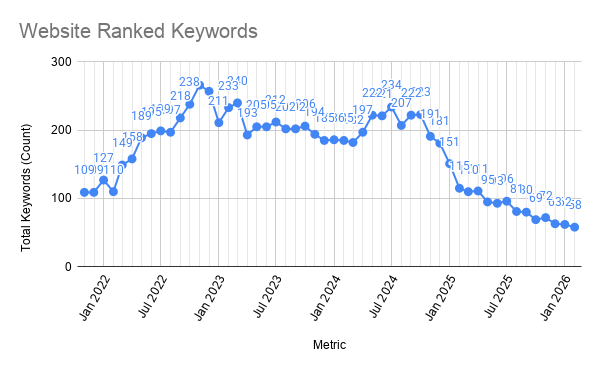
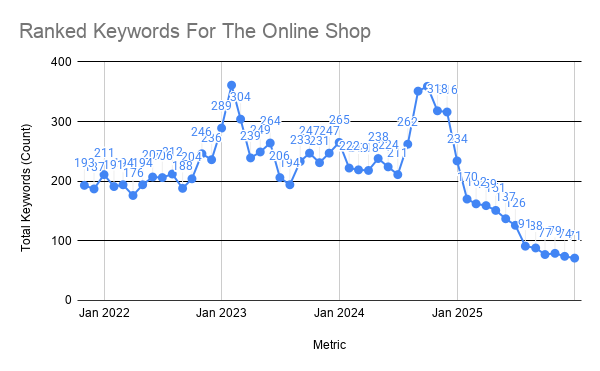
Below are two charts one showing the ranked keywords for an online shop and website. They show the number of keywords that both are ranked for over several years. If you are in the sector you have had a trustee say: “a charity this size doesn’t need a head of digital”. I would contend that no matter how small a charity is there has to be a clear digital understanding and grounding. The lack of understanding and knowledge is staggering and ultimately detrimental for the sustainability of a charity.
Ignorance has consequences for the Digital footprint of a charity
If this were a health check, both sites would be in the intensive care unit.
Google Gemini
What is this data showing? Well after asking Google Gemini analyse the all the data its output was:
“The data across these files paints a picture of a catastrophic SEO collapse for both the website and the shop. If this were a health check, both sites would be in the intensive care unit. This data indicates a site that has likely suffering from extreme technical debt. The “Shop” is no longer an acquisition tool; it’s a liability. Without a total technical and content overhaul, these sites will reach zero visibility by the end of 2026.”
One imagines that Google’s own AI would know a thing or two about search.
Key facts on the lost ranked keywords
Since November 2024 to February 2026 there has been a 69.6% reduction in ranked keywords for the website and a 77.7% reduction on the shop, a 78% and 80% reduction from the peaks respectively.
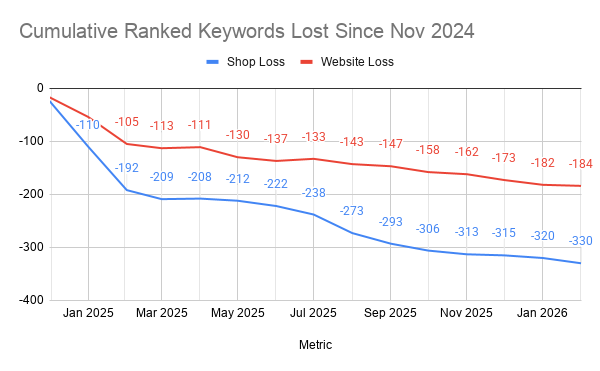
When 79% of acquisitions previously arrive online (new donor, new sponsor, shopper – email sign-ups not included in this figure), with over 70% just from the online shop (and these are paying customers) alone these stats should be very, very concerning.

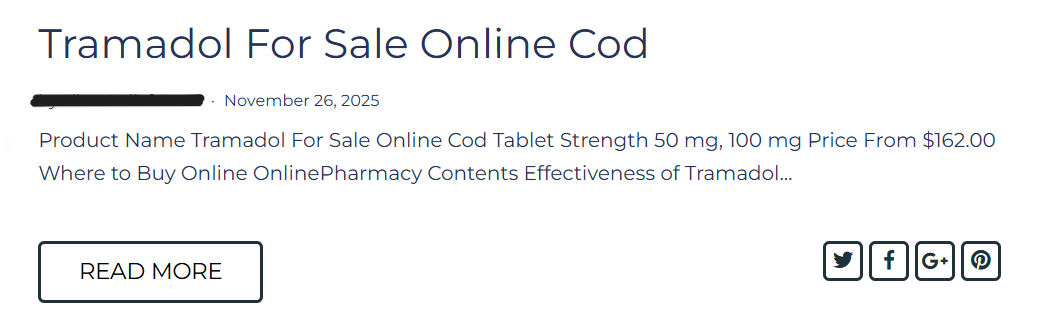
To make matters worse the website even experienced a hack that has gone unnoticed for four months and counting. An injection hack that has created several pages regarding the buying of Tramadol. A charity ranking for “can you get tramadol over the counter” only tells Google not to trust the website at a time when website authority is very important. Charities get a bit of grace from Google, as they are charities so should be good and reliable sources of information, I suspect if this was not a charity website the drop would have been faster and more serious.
Other website / digital issues include:
- Donation pages wasn’t working for over a month
- Sponsorship pages weren’t working for over three months
- Plugins not being updated causing the website to be incomplete for a couple of months
- Email sign-up now disjointed, one onsite form offering interest option, one off site form offering no options
- The misuse of soft opt-in before it became legal, sending appeal emails to people who didn’t opt-in
- Running paid facebook ads for a year to a shop website that wasn’t accepting orders
In the online space a small charity can compete with a large charity for a share of the search volume and visibility. It is vital to understand what is involved and how your digital footprint can be improved. Without reaching new supporters a charity can quickly become unsustainable.
After working with Power to Connect, a Wandsworth based charity with an income that is over 75% less than the one in this case study, they have increased organic search visits, increased visits via social media, had an 87% increase in ranked keywords and an significant increase in the number of volunteers signing up via the website. They are an example of a genuinely small charity with very good trustees and management who understand the importance of maximizing digital reach, having a digital strategy and are prepared to invest in it.
It is not just about donations, it is about reaching your beneficiaries and connecting with them. If a victim support charity in a local area cannot be found then how can they provide much needed support? It is not just about the website, ensuring that all the Google services are connected (Analytics, Google Search Console, Google Tag Manager, Google Business Profile, Google Ads Grant), ensuring a clear content structure across social and the website, using insight to maximise paid ads, email optimisation and automation, using tools to help with efficiency and more.
If you are a small charity and would like to get some advice on where to start, then book a call.
Data obtained via a tool I created in google aistudio using dataforseo (affiliate link). The ranked keyword data is for the first 100 pages of Google only. The results from dataforseo are not exhaustive as some search terms simply do not have the volume.