
Introduction: The 2026 Compliance Landscape
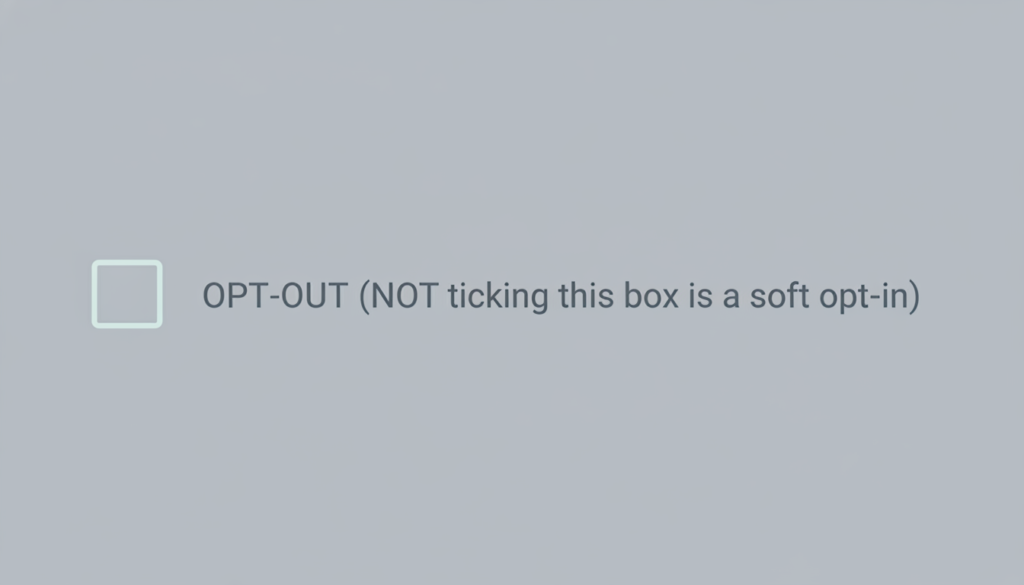
The landscape of charity email marketing regulations UK experienced a monumental and highly anticipated shift in early 2026. For decades, the third sector faced a distinct disadvantage compared to commercial entities. While businesses could seamlessly rely on exemptions to market to their past customers, charities were bound by the strict, inflexible consent mandates of the Privacy and Electronic Communications Regulations (PECR). This created a significant problem for digital fundraising managers: you wanted to grow your donor base and engage with passionate supporters, but compliance anxiety and the fear of regulatory fines held you back.
The solution to this systemic imbalance finally arrived via the Data (Use and Access) Act 2025 (DUAA), which officially received Royal Assent on 19 June 2025. This landmark legislation introduced the ‘charitable purpose soft opt-in’, a mechanism that allows charities to contact supporters without prior explicit consent, provided highly specific conditions are met. These crucial provisions officially came into force on 5 February 2026, prompting the Information Commissioner’s Office (ICO) to issue comprehensive, finalised guidance on 28 April 2026.
Yet, a critical strategic question remains: just because the law allows a soft opt-in, is it truly the best route for your supporter journey? In this comprehensive guide, we will simplify the regulatory jargon, outline the mandatory compliance steps, and explain why maintaining a strict, high-quality explicit opt-in model is still the superior choice for long-term charitable success.
What is the Charitable Purpose Soft Opt-In?
Historically, under the UK GDPR and PECR, any electronic mail marketing—which encompasses emails, SMS text messages, and direct social media messaging—required clear, affirmative consent. Commercial brands bypassed this for existing customers using the standard soft opt-in. Charities could not historically rely on this exemption to send fundraising messages, leaving them heavily restricted when trying to re-engage past donors. The DUAA rectified this by formally amending Regulation 22 of PECR.
Under the new rules, your charity can lawfully send electronic direct marketing without traditional consent if all the following criteria are flawlessly met:
- The sole purpose of the communication is to further your organisation’s core charitable objectives.
- You obtained the individual’s contact details directly from them when they expressed an active interest in your work or provided support (such as volunteering or donating).
- You provided a clear, simple, and free means of refusing these communications at the exact moment you collected their data.
- You continue to provide an easy opt-out mechanism in every single subsequent message you send.
This sounds incredibly liberating for digital fundraising teams. The Fundraising Regulator publicly welcomed the clarity of these updated rules, noting they present valuable new ways to engage loyal supporters. However, the legislation is filled with complex operational nuance. Most notably, the law is completely non-retroactive. You simply cannot apply this exemption to email people whose data you collected prior to 5 February 2026, unless you already hold their explicit consent. To better understand the overarching framework, the ICO offers detailed breakdowns on what the soft opt-ins are and who can use them.
The Critical Distinction: Charitable Purpose vs. Charity Services
One of the most dangerous compliance traps in the 2026 framework is confusing your ‘charitable purpose’ with ‘charity services’ (your commercial activities). The ICO draws a strict, unyielding regulatory line between the two concepts, and blurring them can lead to immediate enforcement action.
Charitable Purposes involve activities directly related to your core mission. This includes urgent fundraising appeals, sharing quarterly impact reports, requesting event volunteers, and political campaigning. If someone signs up to support your animal welfare mission, sending them an appeal for emergency veterinary funds falls neatly under the charitable purpose soft opt-in.
Charity Services (Commercial) encompass the sale of goods and services. This includes your online charity shop, paid event ticketing for non-fundraising galas, or selling ethical coffee. The ICO’s guidance clearly states that you cannot send electronic marketing about your charity’s commercial activities using the charitable purposes soft opt-in.
If someone purchases a branded t-shirt from your charity shop, they fall strictly under the traditional commercial soft opt-in. You cannot seamlessly pivot to sending them a hard fundraising appeal using that same transaction data. You must respect the exact context of the data collection. To ensure strict adherence, charities must keep exceptionally clear, separate CRM lists. Your database must differentiate heavily between a ‘Shop Customers’ list and a ‘News & Appeals’ list. Cross-pollinating these lists without appropriate consent mechanisms is a direct breach of PECR. For more technical implementation details on this separation, review the ICO’s dedicated advice on how to use the charitable purposes soft opt-in securely.
Strategic Opinion: Why the Traditional Opt-In Remains Superior
Despite the legal availability of the new soft opt-in, relying on it as your primary digital growth strategy is a flawed premise. The traditional, explicit opt-in standard remains fundamentally better for your charity’s long-term health. Here is exactly why:
Quality Over Quantity: The main allure of the soft opt-in is the ability to amass a massive email list rapidly. However, a large, low-quality list is merely a vanity metric. It dilutes your overall engagement rates, triggers aggressive email spam filters, and damages your long-term sender reputation. A smaller list built entirely on explicit, affirmative consent guarantees that the subscriber genuinely wants to hear from you. High-quality lists yield significantly better open rates, much higher conversion rates on critical fundraising appeals, and foster deeper, more meaningful supporter loyalty.
Cost Efficiency: Modern email marketing platforms and CRM systems (such as Salesforce, Mailchimp, or Blackbaud) charge tiered pricing based heavily on the total number of contacts in your database. Retaining passive, unengaged contacts who never explicitly asked to be on your list artificially inflates your operational overhead costs. A high-quality, targeted list is inherently cheaper to maintain and yields a vastly superior return on investment. Why pay to email 50,000 people who ignore you, when 10,000 engaged advocates will fund your entire campaign?
Building Unbreakable Trust: Charities operate almost exclusively on the currency of public trust. In an era of heightened data privacy awareness, assuming permission rather than actively asking for it can feel intrusive and presumptuous to the modern donor. The official Code of Fundraising Practice constantly emphasises respectful, transparent communication. Providing a clear, explicit opt-in box empowers the supporter, reinforcing ethical integrity from the very first interaction. When in doubt, always ask for consent. It remains the absolute gold standard for donor relations. To ensure you meet this gold standard, familiarise your team with what consent is and how to use it according to the regulator.
Essential Compliance Checklist for Charities in 2026
If you do choose to implement the soft opt-in for specific, highly targeted campaigns, your compliance infrastructure must be entirely watertight. The DUAA did not abolish accountability; it merely shifted the underlying legal mechanism.
Legitimate Interests Assessment (LIA)
Because you are no longer relying on explicit consent, your lawful basis for processing personal data under the UK GDPR shifts automatically to ‘Legitimate Interests’. The ICO strongly mandates that any charity using the soft opt-in must complete a rigorous Legitimate Interests Assessment (LIA). This is a mandatory three-part test:
- Purpose Test: Are you pursuing a genuine, legitimate charitable aim?
- Necessity Test: Is sending electronic marketing strictly necessary to achieve that aim, or is there a less intrusive way?
- Balancing Test: Do the individual’s fundamental privacy rights override your organisational interests? (Consider vulnerable supporters here).
Documenting this LIA internally is not optional. It is a strict legal requirement that the ICO will demand if a supporter ever lodges a formal complaint regarding your marketing practices.
CRM Architecture and Strict Suppressions
Your technological infrastructure must rapidly adapt to these dual rules. Your CRM must be fully capable of tracking the exact origin of a contact’s data, the specific date it was collected, and the exact exemption applied (e.g., ‘SoftOptIn_Charitable’ vs ‘Explicit_Consent’). You must maintain rigorous suppression lists to ensure that anyone who exercises their absolute right to object is never accidentally contacted again. Poor data hygiene is the fastest route to an ICO penalty.
People Also Ask (PAA)
Does the charitable soft opt-in apply retroactively?
No. Data collected before the legislation commenced on 5 February 2026 is entirely ineligible for the soft opt-in. If you want to market to historical supporters who engaged with you in 2024 or 2025, you must continue to rely on the explicit consent they previously provided, or launch a separate, legally compliant campaign to gather their fresh opt-in under the new rules.
Does the soft opt-in cover SMS and social media direct messages?
Yes. The regulatory rules surrounding “electronic mail” broadly encompass emails, text messages (SMS), and direct messages on social media platforms like Instagram or LinkedIn. It does not cover live telephone calls or physical direct mail, which are governed by entirely different sections of PECR and the UK GDPR.
Can charities use bought-in data lists for soft opt-in marketing?
Absolutely not. To use the soft opt-in, you must have collected the contact details directly from the individual yourself. Data procured via third-party brokers completely invalidates the exemption. If you need more clarity, you can check the ICO’s official stance on using bought-in lists to avoid disastrous compliance failures.
Compliance Comparison Table
To assist your internal data protection officers, here is a simplified breakdown of the three primary frameworks governing your email lists.
| Feature | Traditional Explicit Opt-In | Charitable Purpose Soft Opt-In | Commercial Soft Opt-In (Charity Services) |
|---|---|---|---|
| Consent Mechanism | Active tick box (affirmative action) | Passive opt-out at collection point | Passive opt-out at collection point |
| Permitted Content | Anything specified in the consent statement | Strictly charitable purposes (appeals, news) | Strictly similar commercial products/services (shop items) |
| Retroactive Application | Yes, if previously gathered legally | No (Only data collected after 5 Feb 2026) | Yes, long-standing commercial rule |
| Lawful Basis (UK GDPR) | Consent | Legitimate Interests (Requires LIA) | Legitimate Interests (Requires LIA) |
Pro-Tips for Fundraising Managers & Compliance Officers
- Audit Your Privacy Notice: Core Government data protection guidelines require absolute transparency at all times. Update your website’s main privacy policy to explicitly outline how you plan to use the soft opt-in moving forward, and ensure this link is highly visible at the exact point of data capture.
- Train Your Frontline Staff: Ensure that anyone collecting data at physical fundraising events or high-street locations understands the new script. They must verbally inform the supporter that they will receive marketing unless they actively opt out on the paper or digital forms provided.
- Monitor Engagement Metrics Relentlessly: If you deploy the soft opt-in, watch your unsubscribe rates and spam complaints like a hawk. If these negative metrics spike, immediately revert to a stricter opt-in model to fiercely protect your email domain’s overall deliverability reputation.