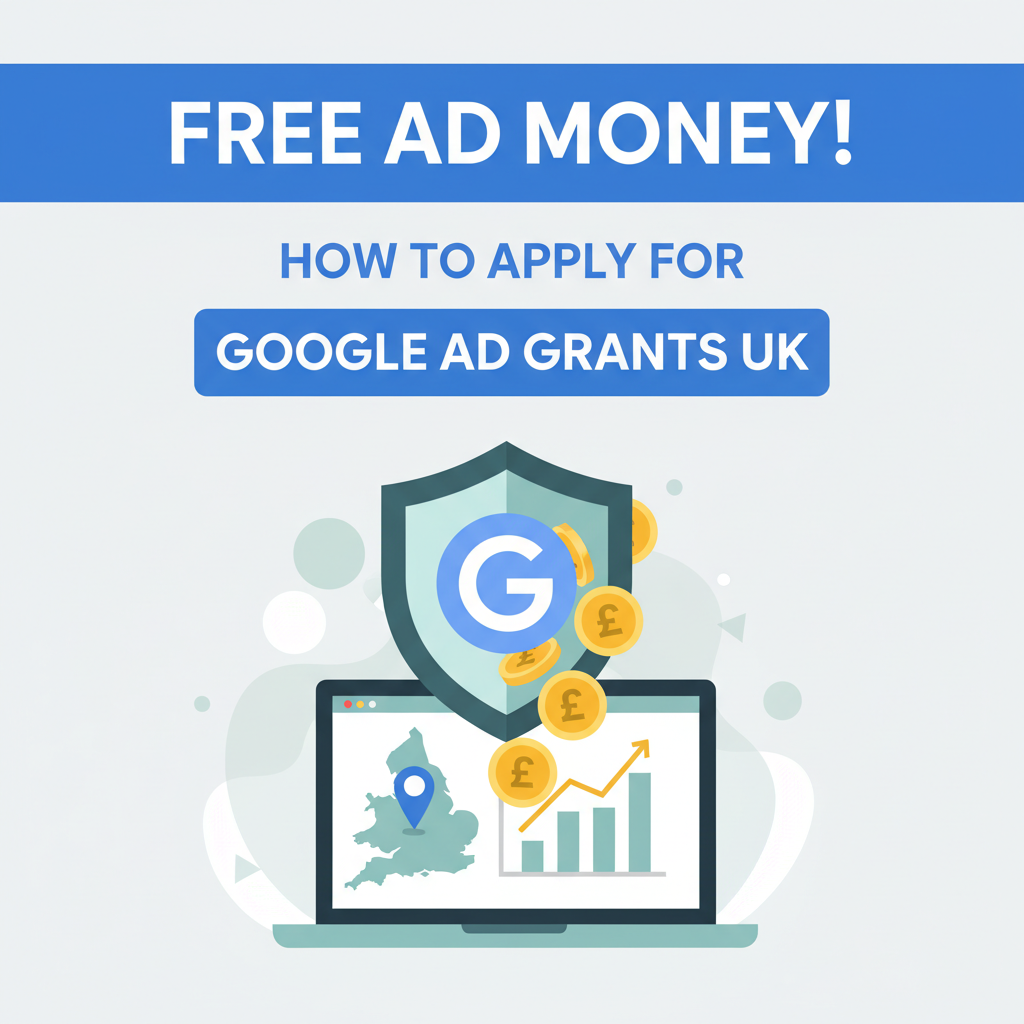

In the competitive digital landscape, UK charities are constantly seeking cost-effective ways to amplify their message, attract supporters, and drive donations. One of the most powerful yet underutilised tools available is the Google Ad Grant. This programme provides eligible non-profits with up to £7,500 (approximately $10,000 USD) per month in free advertising spend on Google Search. However, simply having the grant is not enough; a robust Google Ad Grants strategy for UK charities is essential to turn those free clicks into meaningful action. This article will explore five crucial strategies that your UK charity must implement to unlock the full potential of this incredible resource, boosting both awareness and your bottom line.

1. Build a Rock-Solid Account Structure
The foundation of any successful Google Ad Grants strategy is a well-organised account. A haphazard structure leads to wasted ad spend, irrelevant traffic, and difficulty in measuring results. To avoid this, mirror your campaign structure to your website’s navigation. This logical approach ensures that your ads are highly relevant to the user’s search query and the landing page they are directed to.
Key Structural Elements:
- Themed Campaigns: Create separate campaigns for each of your core activities, such as “Donations,” “Volunteering,” “Upcoming Events,” or specific programmes you run. This allows you to allocate your budget effectively and tailor your messaging.
- Granular Ad Groups: Within each campaign, create multiple, tightly-themed ad groups. For instance, under a “Donations” campaign, you might have ad groups like “Donate to Animal Welfare,” “Monthly Giving,” and “Legacy Donations.” Each ad group should contain a small, focused set of keywords.
- Compliance is Key: Google requires Ad Grants accounts to have at least two active ad groups per campaign and two active ads per ad group. Adhering to these rules is crucial for keeping your account active.
2. Master the Art of Keyword Targeting
Your choice of keywords determines when and where your ads appear. A common mistake is to target overly broad, single-word keywords, which are often disallowed and ineffective in Ad Grants accounts. The key is to think like your potential supporter.
Effective Keyword Strategies:
- Go Long-Tail: Focus on mission-specific, long-tail keywords (phrases of three or more words). Instead of “charity,” target “animal rescue charity in Manchester” or “how to volunteer for a homeless shelter.” These longer phrases indicate higher intent from the searcher.
- Leverage Google’s Keyword Planner: This free tool within Google Ads is invaluable for discovering new keyword ideas, seeing search volume estimates, and identifying terms that your supporters are actively searching for.
- Use Negative Keywords: Just as important as telling Google which keywords to target is telling it which ones to avoid. Add negative keywords to prevent your ads from showing for irrelevant searches. For example, a wildlife conservation charity might add “-jobs” or “-careers” to avoid clicks from job seekers.
3. Write Compelling Ad Copy with Clear Calls-to-Action
Your ad is your digital storefront; it needs to be enticing and clear. With only a few lines of text, you must grab the user’s attention and persuade them to click. Your ad copy must be directly relevant to the keywords in the ad group to ensure a high Quality Score, which Google uses to rank ads.
Tips for High-Performing Ads:
- Highlight Your Impact: Differentiate your charity by showcasing your unique mission and impact. Use powerful headlines like “Help Us Provide 100 Hot Meals” or “Your £5 Can Plant a Tree.”
- Include a Strong Call-to-Action (CTA): Tell the user exactly what you want them to do next. Use action-oriented phrases like “Donate Now,” “Sign Up to Volunteer,” or “Learn More Here.”
- Utilise Ad Extensions: Ad extensions provide additional information and expand the size of your ad at no extra cost. Use sitelink extensions to direct users to specific pages like your donation or volunteer pages, which is a requirement for grant compliance.
4. Optimise Landing Pages for Conversion
Getting the click is only half the battle. If your ad directs users to a generic homepage or a confusing, slow-loading page, they will likely leave immediately. This increases your bounce rate and signals to Google that your website provides a poor user experience. An effective Google Ad Grants strategy for UK charities requires dedicated and optimised landing pages.
Landing Page Best Practices:
- Relevance is Paramount: The landing page must be highly relevant to the ad the user clicked on. If your ad is about volunteering, the landing page should be the volunteer sign-up form, not the homepage.
- Clear and Simple Design: The page should be easy to navigate with a clear headline and a prominent donation or sign-up button. Remove any unnecessary distractions.
- Mobile-First Approach: Ensure your landing pages are fully responsive and load quickly on mobile devices, as a significant portion of traffic will come from smartphones.
5. Track, Measure, and Refine with Conversion Tracking
You cannot manage what you do not measure. Setting up conversion tracking is not just a best practice; it is essential for understanding the return on your (free) investment and is a requirement for using powerful automated bidding strategies.
How to Effectively Track Success:
- Define Your Conversions: A conversion is any valuable action a user takes on your website. For charities, this can include making a donation, signing up for a newsletter, filling out a volunteer form, or downloading a resource.
- Implement Google Analytics: Link your Google Ads account to Google Analytics to get deeper insights into user behaviour after they click your ad.
- Embrace Smart Bidding: Once you have sufficient conversion data, switch from manual bidding to automated strategies like “Maximize Conversions.” This allows Google’s AI to automatically adjust your bids to get you the most donations or sign-ups, and it can bypass the usual $2 bid cap, making you more competitive.
Conclusion: A Powerful Tool for Growth
The Google Ad Grant is more than just free advertising; it’s a transformative tool that can significantly elevate your charity’s reach and impact. By implementing a strategic approach that focuses on a solid account structure, precise keyword targeting, compelling ad copy, optimised landing pages, and robust conversion tracking, UK charities can turn this grant into a consistent source of new donors, volunteers, and supporters. Don’t let this opportunity go to waste. Start building a powerful Google Ad Grants strategy for your UK charity today and watch your mission grow.